
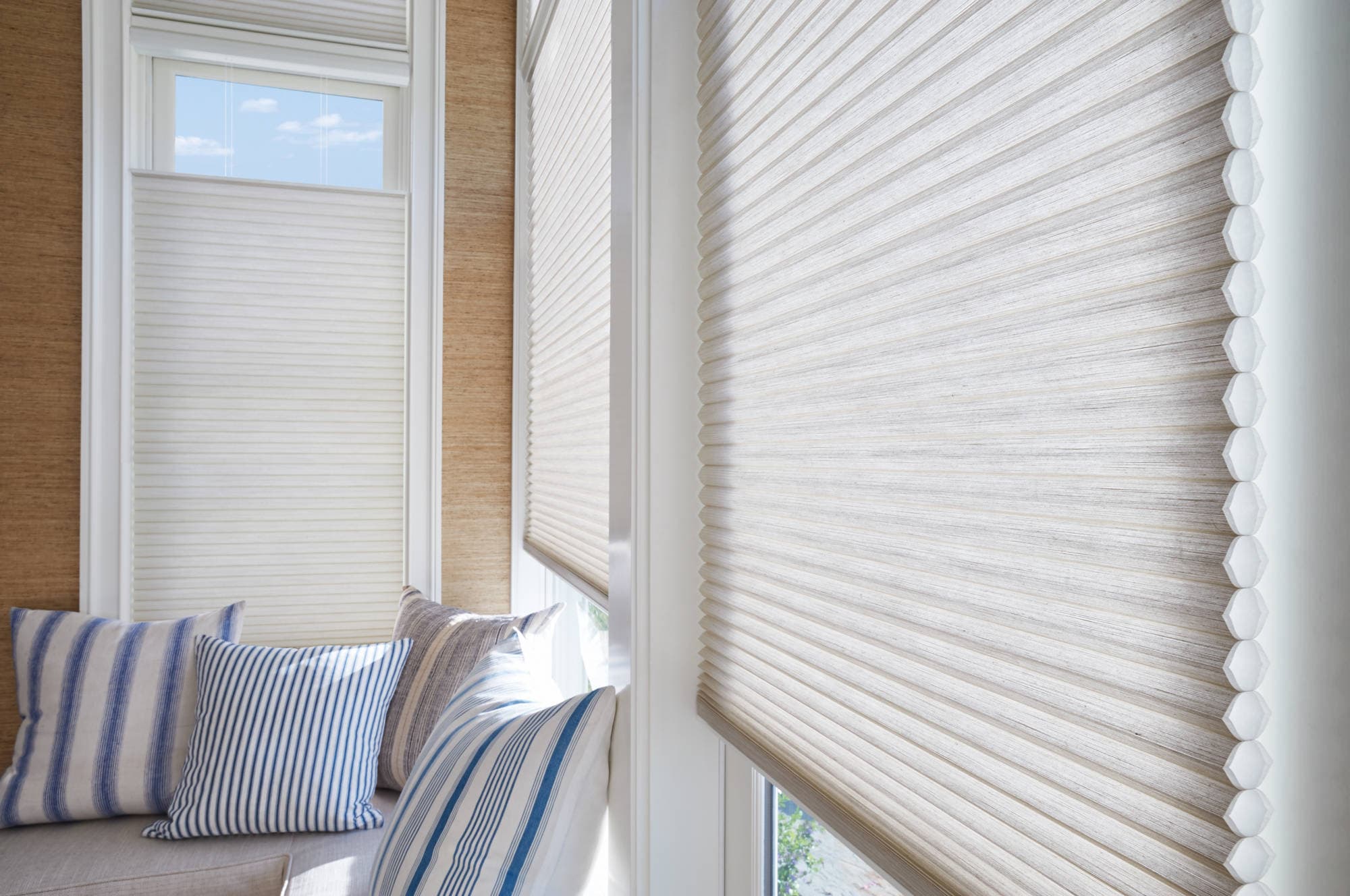
01 · Custom Shades
The most versatile category in window treatments, and the one we sell the most of.
Shades cover the full spectrum of light control: from sheers that diffuse the morning to blackout cellulars that hold the bedroom dark until you decide otherwise. We carry every major Hunter Douglas line and several specialty shade fabrics.
Shade Types
Six families, each with a clear job.
Shades are how we usually start a room. They're discreet enough to layer under drapery, structured enough to stand alone in a kitchen or bathroom, and the easiest category to motorize.
 01
01Sheer & Shading
Hunter Douglas Silhouette and Pirouette. Soft fabric vanes float between sheer panels, diffusing harsh light into something gentle without giving up the view.
 02
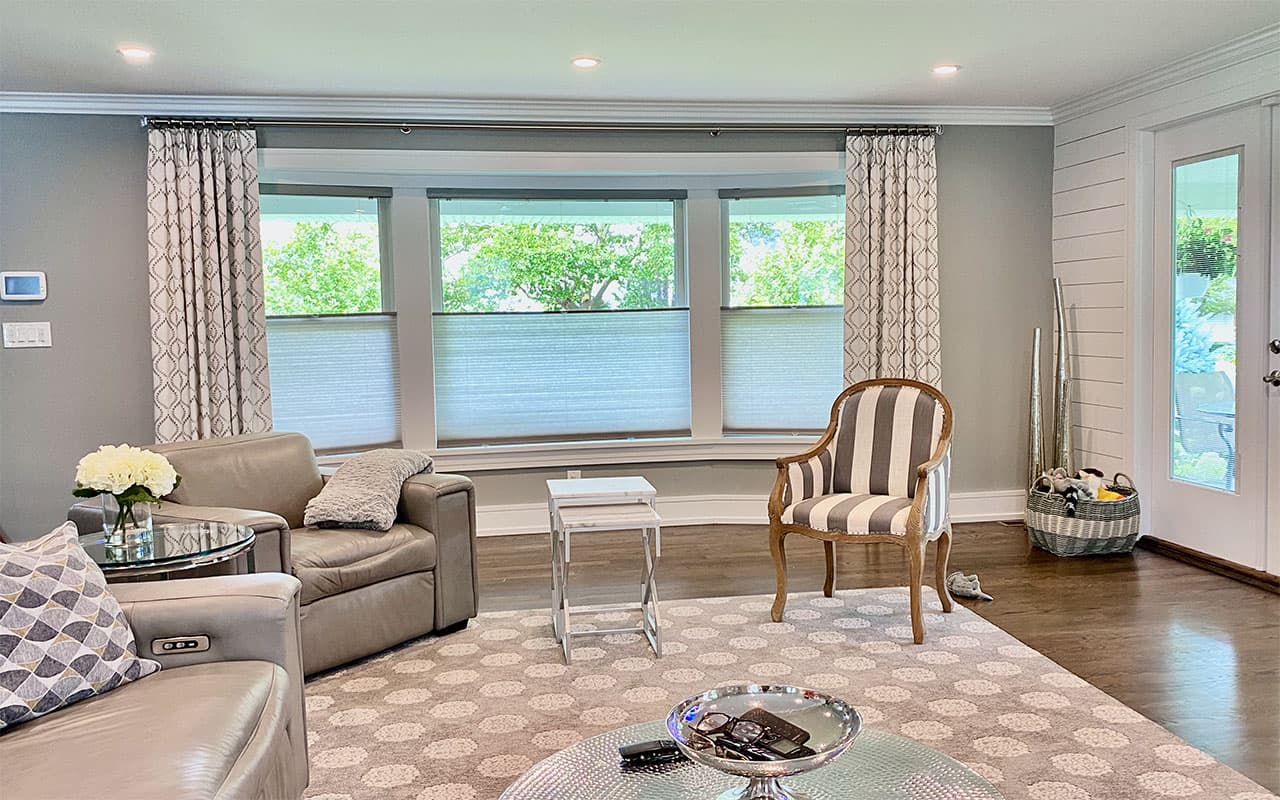
02Cellular Honeycomb
Duette honeycombs. The most insulating shade on the market, winter R-values that genuinely cut heating bills, plus the cleanest lines in the catalog.
 03
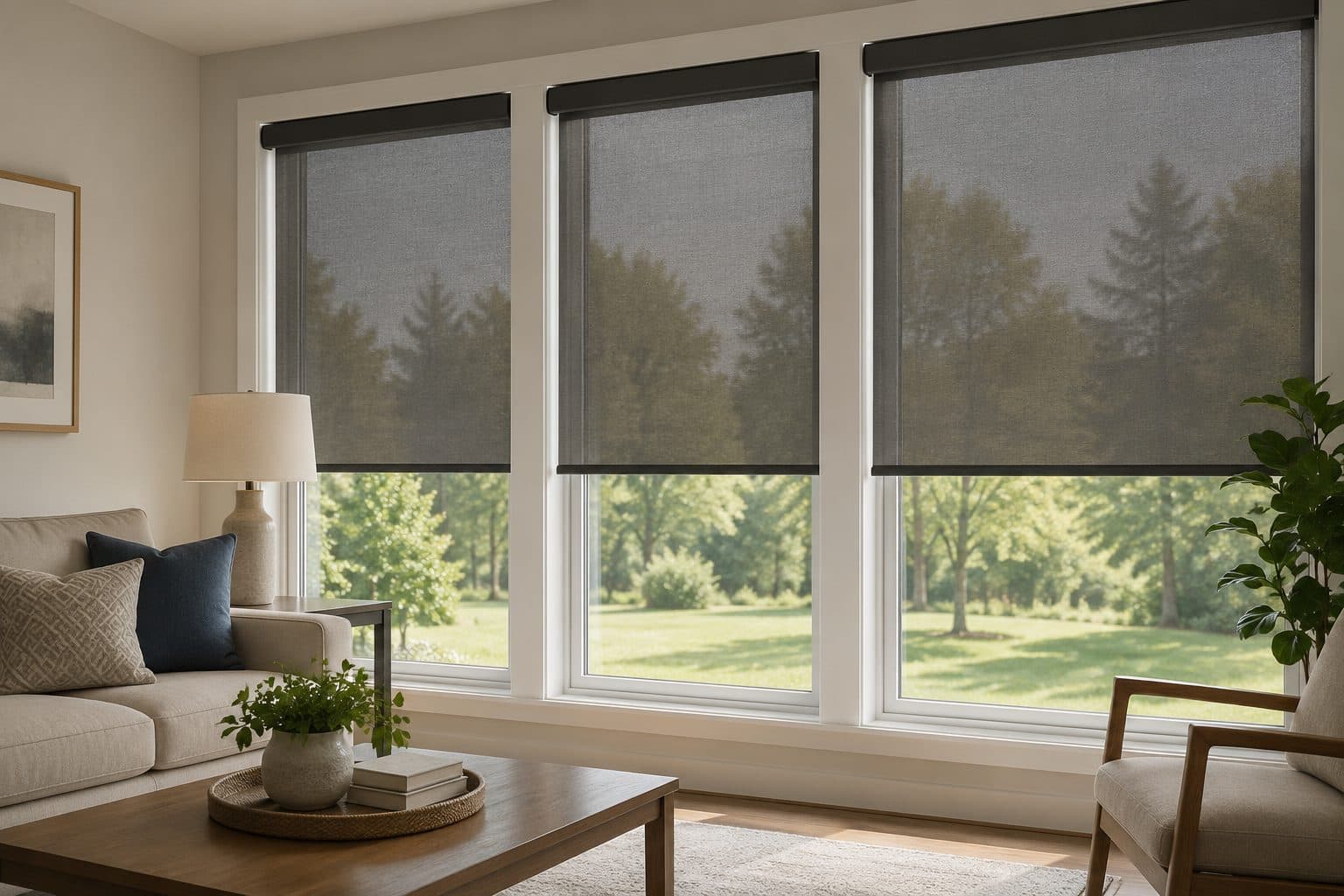
03Roller & Solar
The minimalist's shade. Solar fabrics rated 1 to 14% openness for UV control without losing the view. Excellent for offices and south exposures.
 04
04Modern Roman
Vignette romans. The tailored fabric look of a traditional roman shade, without the visible cords, exposed rear track, or sagging stack.
 05
05Woven Woods
Provenance natural shades made from grasses, reeds, and bamboo. Texture and warmth where a fabric would feel too dressy.
 06
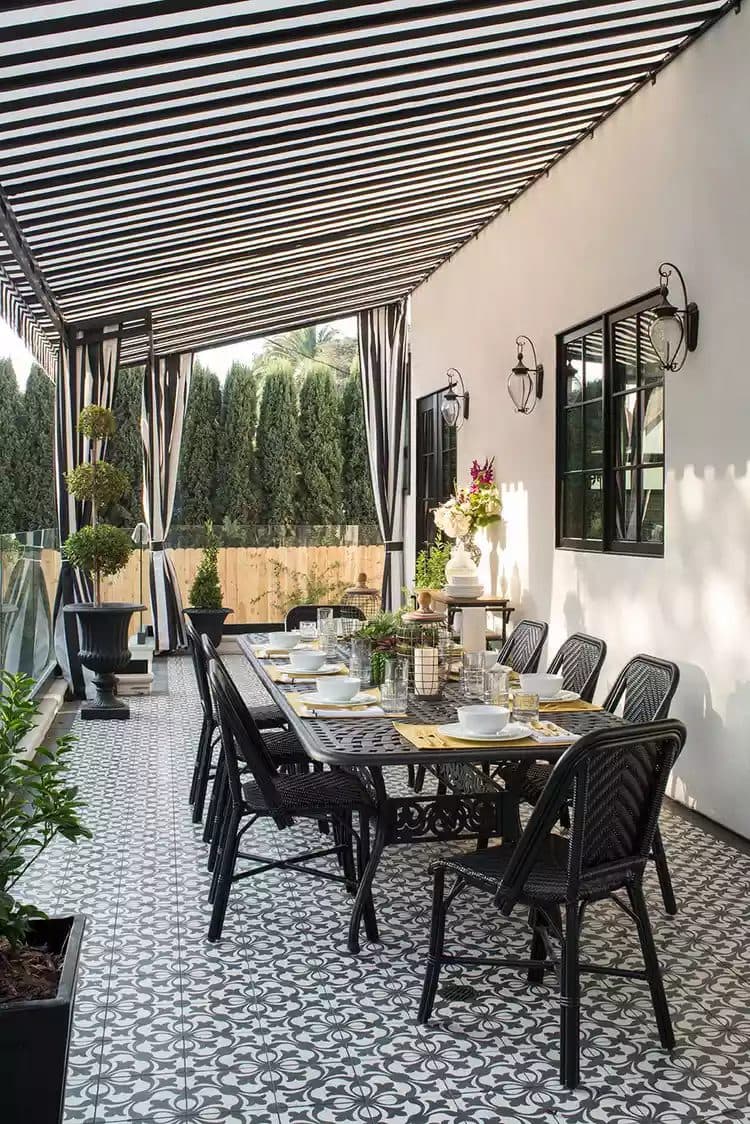
06Sunbrella & Outdoor Shades
UV-rated outdoor fabrics for screened porches, pool houses, and exposed terraces. Built for salt air, sun, and the longer Long Island summer.
Buying Guide
Choosing the right shade, a quick framework.
The shade conversation usually comes down to four questions. We'll walk through these in person, but here's how we think about them so you can come in prepared.
1. What is the shade for?
Privacy, light control, UV protection, energy efficiency, room darkening, or all of the above. Shades that try to do everything tend to do nothing especially well, so we usually pick one job per room and design around it.
2. How does the room handle daylight?
South-facing windows on Long Island bake from late morning through afternoon. North-facing rooms benefit from sheers that brighten what light there is. East and west get glare problems at predictable times, solvable with motorization.
3. Layered or single-layer?
Bedrooms almost always want a layered system: a blackout liner for sleep, a sheer or solar for daytime privacy. Living rooms can usually get by with one shade plus drapery.
4. Cordless, motorized, or manual?
Cordless is now the default, safer for kids, cleaner-looking, and only marginally more expensive. Motorization makes sense above sinks, on tall windows, and anywhere you'd otherwise be opening shades manually multiple times a day.
Talk through your rooms with a designerFree In-Home Consultation
Book your complimentary in-home consultation.
Tell us a little about your project and we will be in touch within one business day. No deposit, no obligation, just a designer with samples at your kitchen table.